

The Grand Bazaar Sunday shopping festival is one of New York’s most famous markets, held weekly on Manhattan’s Upper West Side. In this article on manhattanski.com, we’ll explore what this event is, how it came to be, what you can buy there, and the best time to visit. Whether you’re planning a trip or just looking for interesting spots in NYC, you’ll find plenty of useful information here.
Grand Bazaar in Manhattan: What It Is and How It Started
Grand Bazaar NYC is located on Manhattan’s Upper West Side—a neighborhood where museum classics meet lively streets and coffee shops at every turn. The market itself occupies school grounds, which every Sunday transform into a bustling fair with its own unique rhythm and mood.
Its history dates back to 1979. Back then, it was a fairly typical flea market in the spirit of late 20th-century New York—a bit of chaos, a touch of randomness, and plenty of old items with a history. People came here more to “dig through stuff” than with a specific purchase in mind.
Over the years, the nature of the event has changed. Randomness gave way to curation—vendors began to be vetted, the assortment became more balanced, and the market gradually took on the features of a city festival. An emphasis emerged on local brands, artisanal goods, and vintage items with verified origins. This is a different level entirely—where there’s no cognitive dissonance between an old brooch and a designer bag, only the logic of careful selection.
A specific detail that adds weight to this place is its charitable model. All profits go toward supporting the PS 87 public school. This scheme has been working for decades and builds trust: people come here with the feeling that they are spending their money for a good cause.
Ultimately, Grand Bazaar became a stable part of city life—a place where business, culture, and the habit of spending Sundays out of the house intersect.
What Happens Here: Goods, Festivals, and Atmosphere
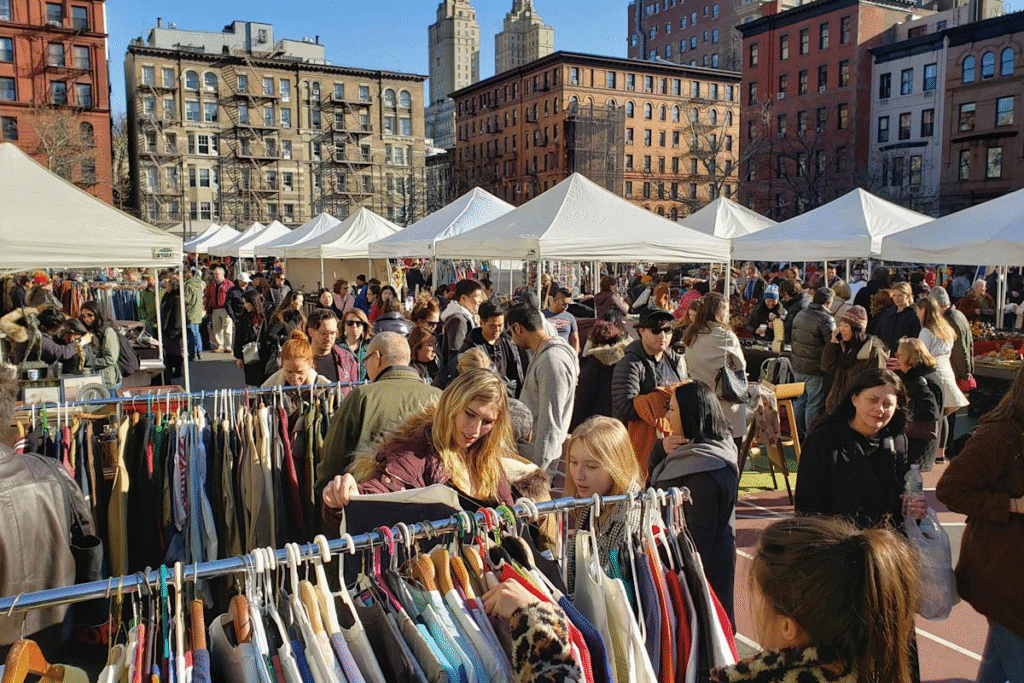
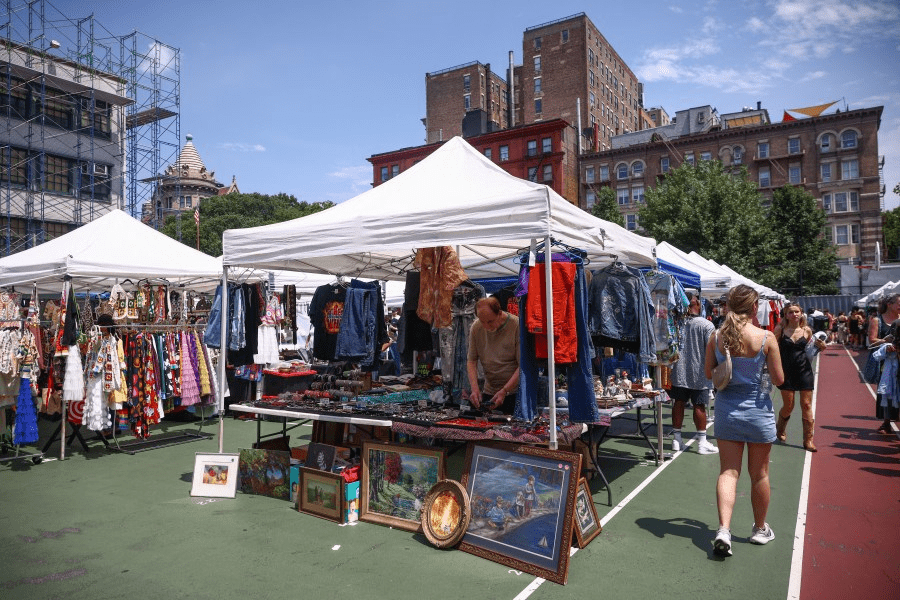
The main intrigue of Grand Bazaar lies in the details. There’s no sense of sameness like in shopping malls: every row reveals something new, and you never know exactly where you’ll find that one thing that “grabs” you.
The assortment focuses on several key areas:
- vintage – from clothing to small accessories with character;
- antiques and collectibles;
- artisanal jewelry and decor;
- local brands with small production runs;
- street food that smells good from half a block away.
The value lies in the fact that many items are one-of-a-kind. In other words, you’re more likely to find a rare outfit than the dress you saw at your friend’s wedding anniversary last year. You can often find truly interesting and original items here.
A separate highlight is the themed festivals. Throughout the year, the market shifts its focus: there are vintage days, handmade fairs, and seasonal events with a culinary lean. During these periods, the space operates slightly differently—more people, more specialized vendors, and a different vibe.
An important detail: you can clearly feel the curated approach. The vendors aren’t random—and it shows. Curation sets the overall standard, from the quality of the items to how they are presented. That’s why there’s no cognitive dissonance between different categories; you won’t find high-end goods sitting next to someone’s old rags.
The atmosphere is built on simple things – chatting with vendors, music, the smell of food, and moving between the rows. Some come with a specific goal, others just for a stroll. Both are perfectly fine. No one will kick you out for not buying anything.
Interesting Facts, Figures, and Tips for Visitors
Grand Bazaar has its own hard stats that explain its scale:
- about 150–200 vendors every Sunday;
- over 40 years of continuous operation;
- thousands of visitors throughout the day;
- 100% of profits go to school funding;
- the market is open year-round, regardless of the season.
These figures show a well-oiled machine that maintains a balance of demand, curation, and organization.
Now for the practical side. The best strategy is to decide on your goal. If you want to find something truly interesting, it’s worth arriving early. This applies to any commercial space, even the Strand Bookstore itself. In the first few hours, vendors put out their best items, and the competition for them is real. By midday, the rhythm changes—more people, more movement, fewer chances for a “quiet find,” but more atmosphere.
Haggling is possible here, but without the typical market intensity. It’s more of a friendly dialogue than the classic price-slashing you might find in Asian markets. Many vendors know the value of their items well—especially when it comes to vintage or artisanal work.
A few small things can significantly impact your experience:
- comfortable shoes – you’ll be doing a lot of walking;
- both cash and card – not everyone takes both;
- attention to detail – the best items are often “hidden” and need to be spotted.
And one thing that’s easy to underestimate: the crowd. In good weather, the number of people grows, which affects the pace—sometimes you literally have to squeeze between the rows. But that’s part of the vibe, and you get used to it quickly.
Grand Bazaar can be seen as part of a walk through Manhattan. But in reality, this flea market is like social media—you pop in for an hour and end up staying for three. However, unlike aimlessly scrolling through reels, here you can at least leave with a bag of cool threads in your hands.