

The Lower East Side is undoubtedly one of the earliest neighborhoods in New York City that has been significantly transformed over time. It has undergone great changes and witnessed various cultural shifts that have dominated the United States. Read more about the history of the Lower East Side and its connection to immigrants from all over the world on manhattanski.
Originally, this area of Manhattan consisted mainly of agricultural areas and open spaces. Dutch and English settlers established here farms and gardens in the late 17th century. However, starting in the mid-19th century, the Lower East Side became a center of immigration, especially for newcomers who were looking for new opportunities in a foreign country.
Immigrants from Eastern Europe, primarily Jews and Italians, settled in the neighborhood, creating a vibrant and diverse community in this part of Manhattan. The Lower East Side gained recognition as a launching location for immigrants, with numerous crowded apartment buildings and bustling streets filled with a variety of shops and markets. It can be stated that this path to the development of this area of Manhattan (as a ‘starting location’) became the beginning of the future ethnic diversity of its residents.
From agriculture to a beacon for immigrants
The Lower East Side, as mentioned earlier, is one of the oldest areas of New York. It has a long and dynamic development history, which is characterized by constant transformations, from architectural to ethnic. Founded as an agricultural region, this area has witnessed a consistent rise in popularity, especially among immigrant communities. It was involved in organized crime, as well as various cultural movements. This made the Lower East Side of Manhattan culturally diverse.
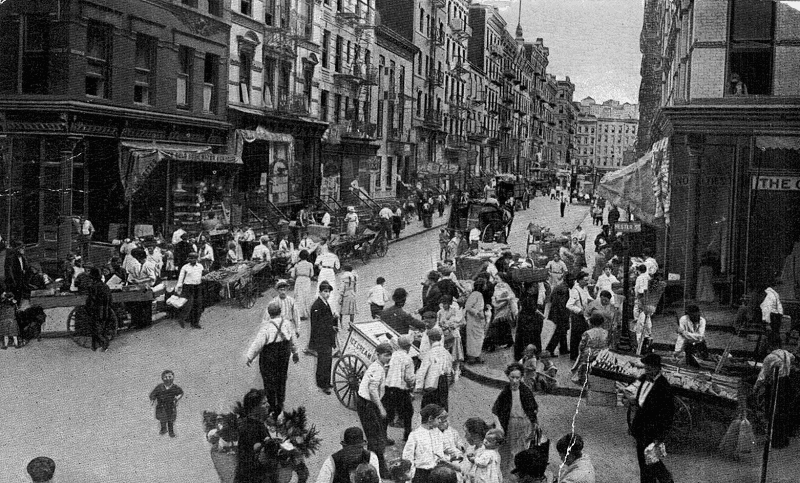
The legacy of the influential founding families has been preserved in such landmarks as Delancey Street, Beekman Place and Corlears Hook Park. In the 1630s, Jacobus van Corlaer settled on the Lower East Side for farming. His plantation was purchased by Wilhelmus Hendricksen Beekman, who became a prosperous and influential resident. James Delancey, a Loyalist, owned extensive farmland and gardens in the 1760s. He sought to transform the land bounded by Broome, Hester, Essex and Eldridge streets into a replica of West London. However, his ambitions were dashed when his property was confiscated after the Revolutionary War.
Throughout its history, Lower Manhattan served as a beacon for immigrants from all over the world. Along with Irish, Italian, Polish and Ukrainian families, the Lower East Side fostered communities of German, African American, Chinese, Jewish and Dominican immigrants. The National Immigrantion Museum, the Educational Alliance Settlement House and numerous historic churches, synagogues and monuments bear witness to the rich cultural past of the Lower East Side. It has preserved its heritage for a long period of time.
The Jewish subdistrict of the Lower East Side
In the 1840s, the Lower East Side witnessed a rapid growth in the German population, leading to the formation of several neighborhoods known as Kleindeutschland or Little Germany. This community flourished over the next four decades and eventually became home to the third-largest German-speaking population in the world. However, on June 15, 1904, the German community faced a significant tragedy that claimed the lives of many people. It was the disaster of the steamship General Slocum. This passenger steamship, carrying mostly German parishioners, caught fire on the East River on its way to a picnic, resulting in the deaths of over a thousand people, mostly women and children.
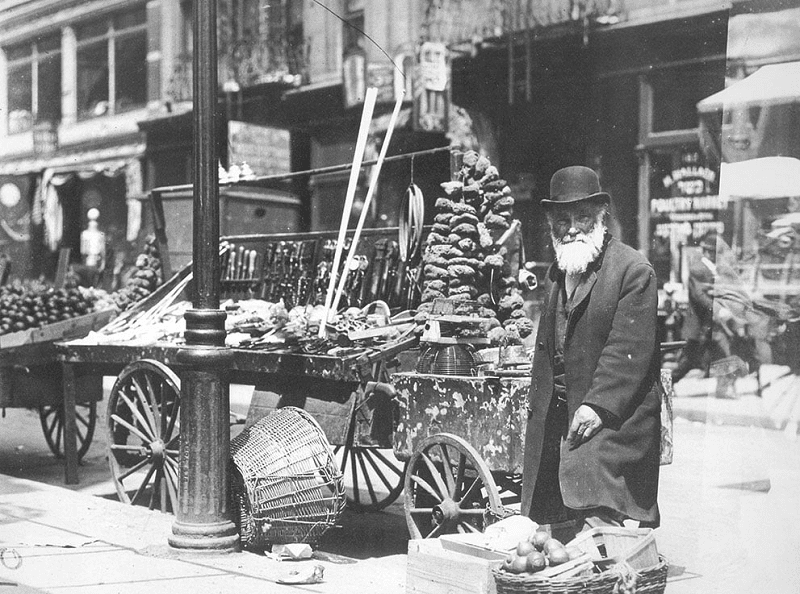
The Lower East Side is widely known for its rich Jewish history and served as a vibrant center of Jewish immigration. In the early 1900s, the wave of Eastern European Jews fleeing the problems of the time began to outnumber immigrants from other communities. They brought with them their unique talents, which led to the creation of a thriving theater district. These talents had a great influence on the modern Hollywood industry. The roots of Paramount Pictures, MGM and 20th Century Fox originate from the Lower East Side of Manhattan. The area has also become a home for Hollywood actors from all over the world.
It is also interesting to note that crime flourished and continued to operate in Lower Manhattan in the first half of the 20th century. The Italian and Jewish mafias became influential economic and political forces in this borough. The history of the Lower East Side will forever retain the chronicles of organized crime, along with famous places that are remembered for numerous murders and massacres. The iconic style associated with Jewish mob boss Arnold Rothstein became the quintessential Mafia outfit immortalized in Hollywood.
The neighborhood’s development due to immigrants
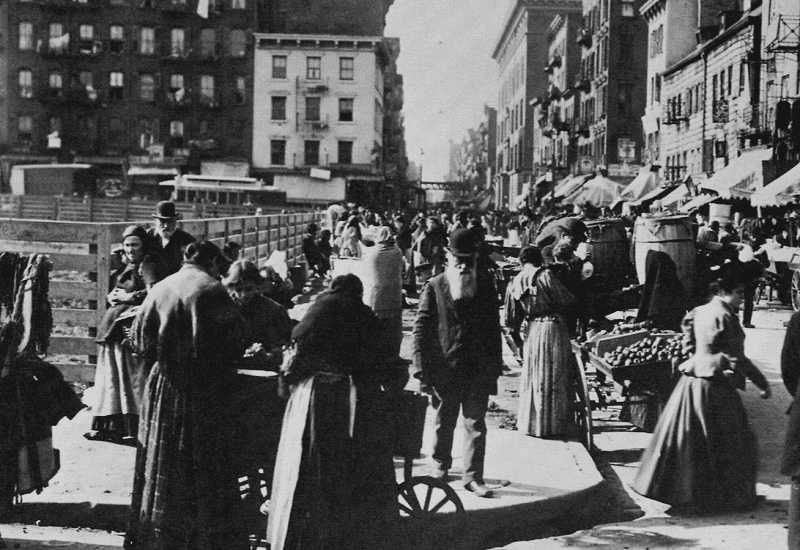
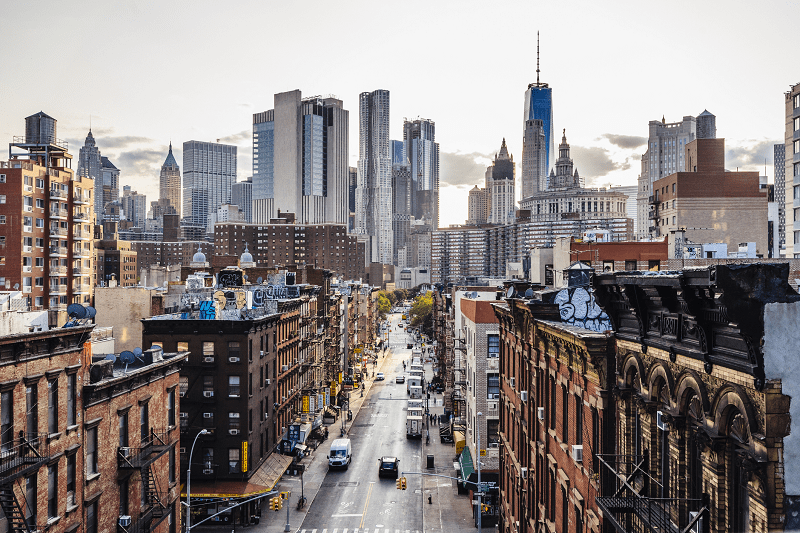
The historic Lower East Side encompassed the various neighborhoods now known as the East Village, Little Italy, Nolita, Alphabet City, Bowery, Two Bridges and Chinatown. In the 1960s, the East Village began to attract a diverse population, including artists, musicians and hipsters. Their presence and cultural influence were significant. By the 1970s, the East Village had established itself as a distinct neighborhood within the Lower East Side. Gentrification has taken hold and gained momentum in the Lower East Side since the early 2000s, transforming it into one of the most desirable neighborhoods in New York City.
In 1978, under the leadership of Liz Christie started a program in collaboration with such organizations as CENYC, Green Guerrillas, Charas el Bohio, The Real Great Society, artist Gordon Matta-Clark and community garden organizers Olin Foret and Carmen Pabon. They initiated the development of urban parks and gardens. Notable examples include the La Plaza Cultural Garden, the Gardens of the Nations and El Bello Amanecer Boriqueño Garden. Green spaces have served as a valuable asset in the revitalization of the area.
Lower East Side crime linked to Immigrants
In 1987, a group of homeless people set up camp in Tompkins Square Park to draw attention to the plight of those left homeless by the demolition of homes on the Lower East Side. The situation escalated in 1989. A riot broke out on Avenue B and in Tompkins Square Park, resulting in numerous injuries and subsequent lawsuits against New York City.
A more significant incident has been preserved in history, which occurred in 1991. According to official data and historical references, about 300 police officers were deployed to evict homeless people from Tompkins Square Park. This eviction led to a riot, during which a store on Avenue A was set on fire. The area was cordoned off for a week, the bandstand in the park was demolished and the park was closed for a year for renovations, at a total cost of up to $3 million.