

The devastating attack on the iconic twin towers of the World Trade Center, which occurred on September 11, 2001, is an event that everyone will remember forever, especially New Yorkers. The world-famous event left the city’s residents with scars and wounds that cannot be healed with words… One of the respected figures in the United States government, the head of the administration of President Bill Clinton, Thomas McLarty, recalled during the turbulent period that the country had never before encountered such acts of aggression. However, is this statement correct? Read more on manhattanski.
If we turn to the chronicles of the past, this was not the first act of large-scale aggression against these symbolic skyscrapers. In 1993, evil-minded criminals stuffed a car with explosives on the underground levels of one of the towers. Although the scale of the 2001 attack was an unprecedented incident, according to historical references, more than a century ago, one of the boroughs of New York, Manhattan, became a target for terrorists (the conspiracy of 1864). Read more about how the attempt to burn down the borough’s hotels took place during that period of time.
How did the conspiracy begin?
In 1864, prominent philosophers and artists developed their thoughts in the bustling metropolis of New York. By the 1860s, Manhattan Island had an impressive population. Up to 814 thousand people were registered on a small area, crowded into noisy neighbourhoods. It is worth noting that a significant part of people lived in the infamous Five Points district, known for its boundless poverty.
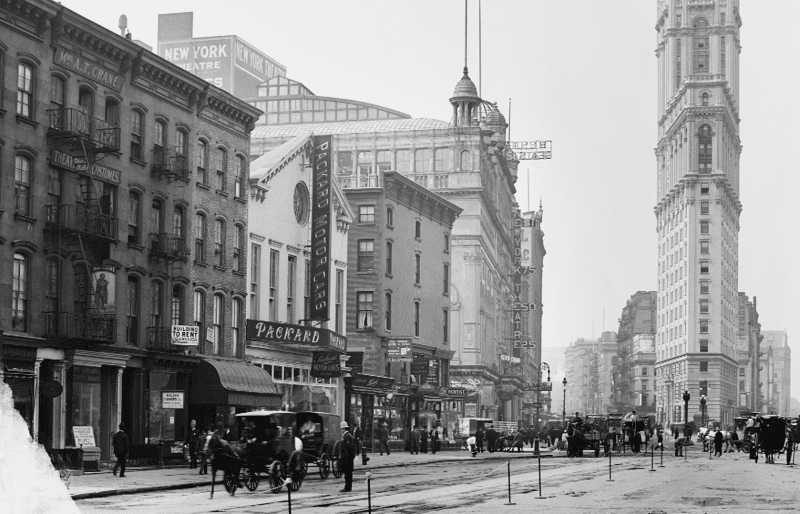
Beyond 42nd Street, a few communities lived in small areas of open nature, while smart citizens purchased huge tracts of land near Central Park as early as 1856. The crystal waters of the Hudson and East Rivers retained their pristine purity, luring city dwellers to the healing water entertainment. Next to the nature, a rest from the harsh city life took place every day. The citizens took advantage of this opportunity, as life in a metropolis requires not only physical but also spiritual strength.
A day that went down in history
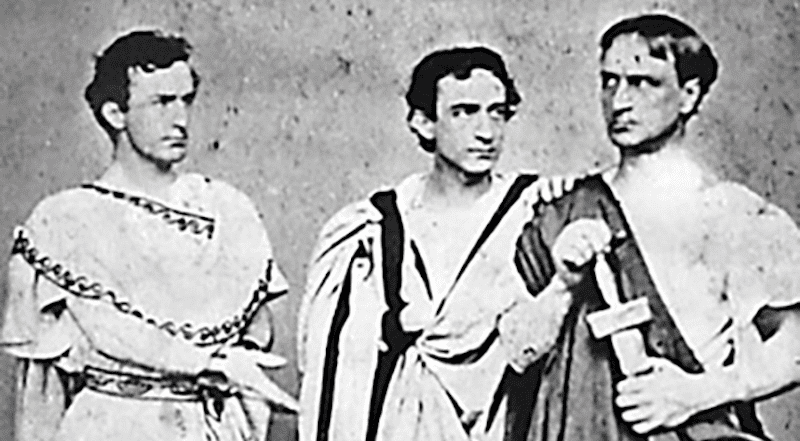
However, all these events have gone down in history. The spotlight is on the unremarkable day of November 25, 1864, filled with an atmosphere of expectation and joy. For more than eight decades, this significant date was fixed as Evacuation Day. Every year, the townspeople commemorated the withdrawal of British troops from New York during the events of the Revolutionary War. However, this particular year gave it additional significance, as news broke about a joint performance by the famous acting brothers Edwin Booth, Junius Booth Jr. and John Wilkes Booth. Putting aside their differences, they prepared a bright performance on the stage at the Winter Garden, captivating the audience with their beautiful theatrical masterpieces.
The beginning of the operation: a daring plan and unforeseen circumstances
As the sun sank below the horizon, an underground network of Confederate agents carefully developed a detailed plan to turn the grandeur of New York City into flames. The plans for this conspiracy had been carefully worked out for months. Robert Martin, a former colonel, was the mastermind. In 1864, Martin began a secret mission across the Canadian border, interested in the places where he was expected to take part in Confederate operations. This daring plan was conceived as an act of retribution or an instrument of revenge, to compensate for the damage done by the ruthless Union troops to the fertile Shenandoah Valley of Virginia.
In a daring plan, colonel Martin and his secret team, skillfully disguised as ordinary citizens, crossed the Canadian border to join forces with some rebels on the fateful election day of November 8. These events have been called the ‘Conspiracy of 1864’ by historians and prominent figures, as a real conspiracy took place between Canadian terrorists and rebels.
Their goal was clear. They wanted to set a series of fires that would engulf several famous hotels along the famous Broadway. The rebels were to take advantage of the chaos to start a large-scale uprising. The daring climax of their mission was to capture a certain general whom they intended to subdue and raise the Confederate flag over the city, declaring it an independent entity.
Effective Union intelligence and the first hotel fires
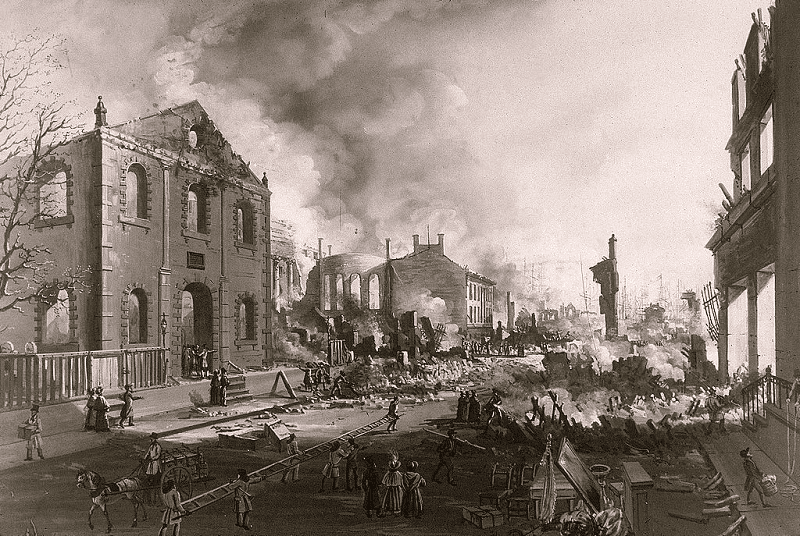
Despite the detailed plan developed by Robert Martin, events turned out in the Union’s favor. Successful intelligence alerted the troops to the plan of the rebels and terrorists, forcing the generals to quickly deploy troops to maintain order within the city. Timely intervention, combined with news of General William T. Sherman’s victory in Atlanta, dealt a crushing blow to the high ambitions of the rebels of the authorities.
Despite the failure, a group of eight confederates continued to fulfill their mission and set fire to the hotels of Manhattan. Skillfully penetrating the objects of the metropolis, they stopped at various hotels along Broadway, using false names. One of the trusted persons at the same time contacted chemists to obtain a significant amount of fire mixture. It was supposed to increase the incendiary arsenal of terrorists.
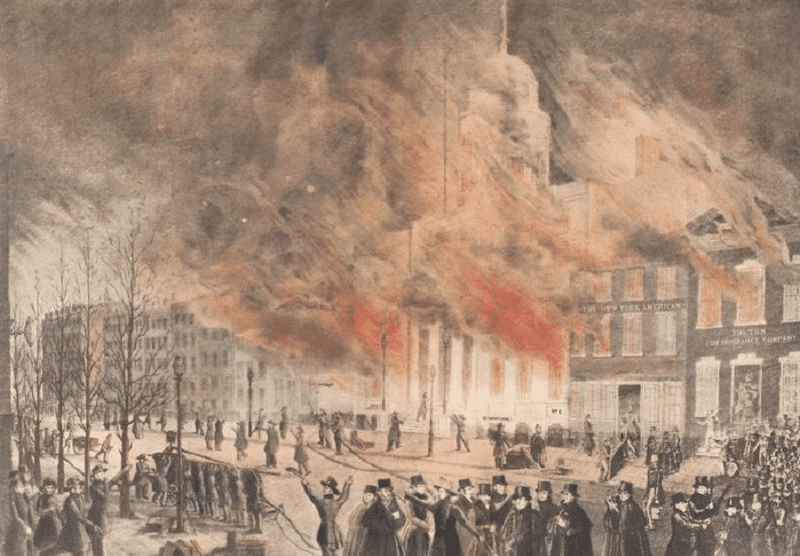
Under the cover of darkness, they began to act on Friday, November 25. The initial blow was aimed at the St. James’s Hotel, located at the intersection of the streets and Broadway in the very center of Manhattan. When evening was approaching, vigilant townspeople noticed wisps of smoke coming from the room. The relentless wave of arsons continued. Each hotel on the list was falling victim to the actions of evil-minded persons.
The audacious attack on the bustling metropolis of New York immediately caused fear and anxiety among the population, which echoed on its streets. According to the illustrated newspaper of Frank Leslie, it was recognized as ‘the most vile attempt to fan the flames and cause tragedy that has ever been recorded in the annals of history’. The Times called the 1864 conspiracy a disgusting act, aimed only at intimidating the civilian population.
Failure of the operation: the search for suspects who successfully left the country
At dawn the next day, the police began a high-speed pursuit of the suspects, which ended with the arrest of almost 200 people. In response to the crisis, the Times called for increased scrutiny of residents of the southern part of Manhattan. The Hotel Owners Association demonstrated its determination and offered a significant reward of up to $20,000 for the successful detention of the suspects. However, cunning prevailed and every participant managed to avoid detention. By that time, they were on trains crossing the country’s border.
Although the actual damage caused by the terrorist fires was relatively small, American historians emphasize the consequences for the city’s population. The events caused fear and anxiety, which ceased after some time. However, life in New York quickly returned to its hectic rhythm and the townspeople did not learn from this attack.